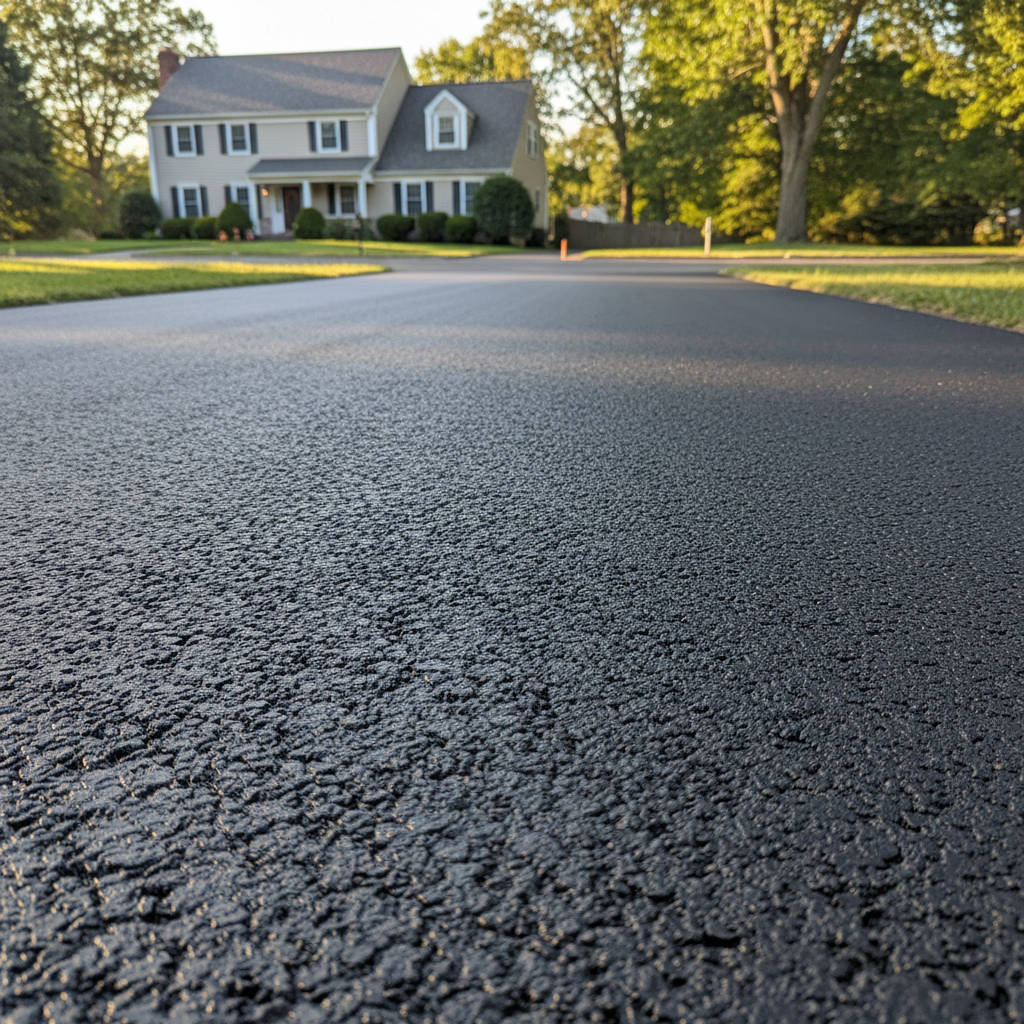
A driveway or a parking lot looks simple once it's done. Black, flat, done. What you can't see is the four or five inches of compacted base underneath it, the grade that was cut to move water away from the foundation, and whether the asphalt itself was laid thick enough to survive a Bronx winter. That's the part a homeowner is actually paying for, and it's also the part most people have no way to check once the truck drives off.
This isn't really about picking a company you like. It's about knowing enough to tell which bid is honest.
Why the ground here matters more than people think
A lot of the Bronx sits on Fordham gneiss or Manhattan schist close to the surface, especially up around Riverdale and parts of the East Bronx, which is actually decent news for a base, it drains and it doesn't heave much. But plenty of other blocks, especially older ones near the Bronx River or Westchester Creek, have fill soil underneath, sometimes decades of it, layered in when these neighborhoods were built up in the 1920s through the 1950s. Fill compacts unevenly. A contractor who doesn't test or at least probe that base before paving is gambling with your money, not his.
Clay pockets show up too, and clay holds water. Pave over wet clay without a proper gravel base and you'll get alligator cracking within two or three winters, not twenty years out. If a contractor's answer to "what's under my old driveway" is "we'll just pave over it," that's worth a follow-up question, not an automatic yes.
What a real bid actually spells out
Any bid worth signing should tell you the thickness of each layer, not just "we'll put down asphalt." A typical residential driveway here runs 2 to 3 inches of binder course over 4 to 6 inches of compacted stone base, topped with a 1.5 to 2 inch wear course. A commercial lot that's going to carry delivery trucks needs more base and often a thicker binder, not just a thicker top layer, because the top layer isn't what fails first under heavy weight.
- Base depth and material, usually crushed stone, not just compacted soil
- Asphalt thickness for each layer, binder and surface course separately
- Grading and pitch, so water runs toward the street or a drain, not toward your garage
- Edge restraint, especially where the asphalt meets a sidewalk or your neighbor's property line
- Cure time before you drive on it, and before you park a heavy vehicle on it
Fresh asphalt needs about 24 to 48 hours before regular car traffic, and closer to a week before it's fully cured enough to handle a loaded dumpster or a trailer sitting in one spot. Any bid that doesn't mention this at all usually means it wasn't thought through, not that it doesn't matter.
Permits, curb cuts, and why that's not optional in New York City
If the work touches the curb cut or the sidewalk apron, that's a Department of Transportation permit, not a formality you can skip because it's "just a driveway." Commercial paving and larger lots can also trigger a Department of Buildings review depending on scope. A contractor who's done work across the Bronx before should know this without being asked, and should be willing to say up front whether your job needs a permit or not. If someone tells you "nobody checks," that's not confidence, that's a problem you'll inherit later if a neighbor complains or the city does a sidewalk survey.
Many streets in the East Bronx and in co-op developments also have shared driveways or easements, which means a paving job can affect more than one property. A contractor who doesn't ask who else uses that driveway hasn't done this enough times.
Weather windows and why timing isn't just scheduling
Asphalt plants in this area generally won't sell hot mix below about 40°F, because the material cools and starts to set before it can be compacted properly. That limits paving season roughly from April through November here, with July and August bringing their own issue: the mix cures fast in the heat, so the crew has less working time to compact and finish it before it stiffens up. Sealcoating has the opposite problem, it needs warm, dry weather to cure, generally 24 hours without rain, which is part of why late fall sealcoat jobs in the Bronx are a gamble.
Winter is the season that tests everything that was done wrong. The Bronx sees somewhere around 30 to 40 freeze-thaw cycles a year, sometimes more in a mild winter where it bounces above and below freezing repeatedly instead of staying cold. Water gets into any crack, freezes, expands, and widens it. That's why a contractor who's serious about the work will talk to you about crack sealing and sealcoating on a schedule, not just as an upsell after something's already failed.
Red flags worth walking away from
A bid that's dramatically lower than two or three others usually means thinner asphalt, no real base work, or asphalt that's been cut with recycled material in a way that won't hold up. Ask what's actually different about the low number, and listen for a real answer.
Door knockers offering to pave your driveway with "leftover asphalt from a job down the street" at a discount are a known scam in this city, not a rare one. There's no such thing as leftover hot mix, it has to be used within a couple hours of leaving the plant or it's no good.
Cash-only, no written contract, no insurance certificate, that's three reasons to say no before you even get to price. A legitimate contractor carries liability insurance and can show it without being pushed. Ask for it the same way you'd ask to see a license.
And if someone won't give you a straight answer on base depth, drainage, or how long the job is guaranteed for, don't assume they're just being casual about paperwork. That's usually the answer itself.
We've laid out the trade-offs here because they're the same questions we'd want answered if it were our own driveway. If you want to talk through a specific job, Westmark Asphalt Services works across the Bronx and the surrounding towns and can walk you through what your lot actually needs before any bid gets written.