Who We Are

About

A local asphalt contractor serving homeowners across Bronx, NY.

Home › About Us
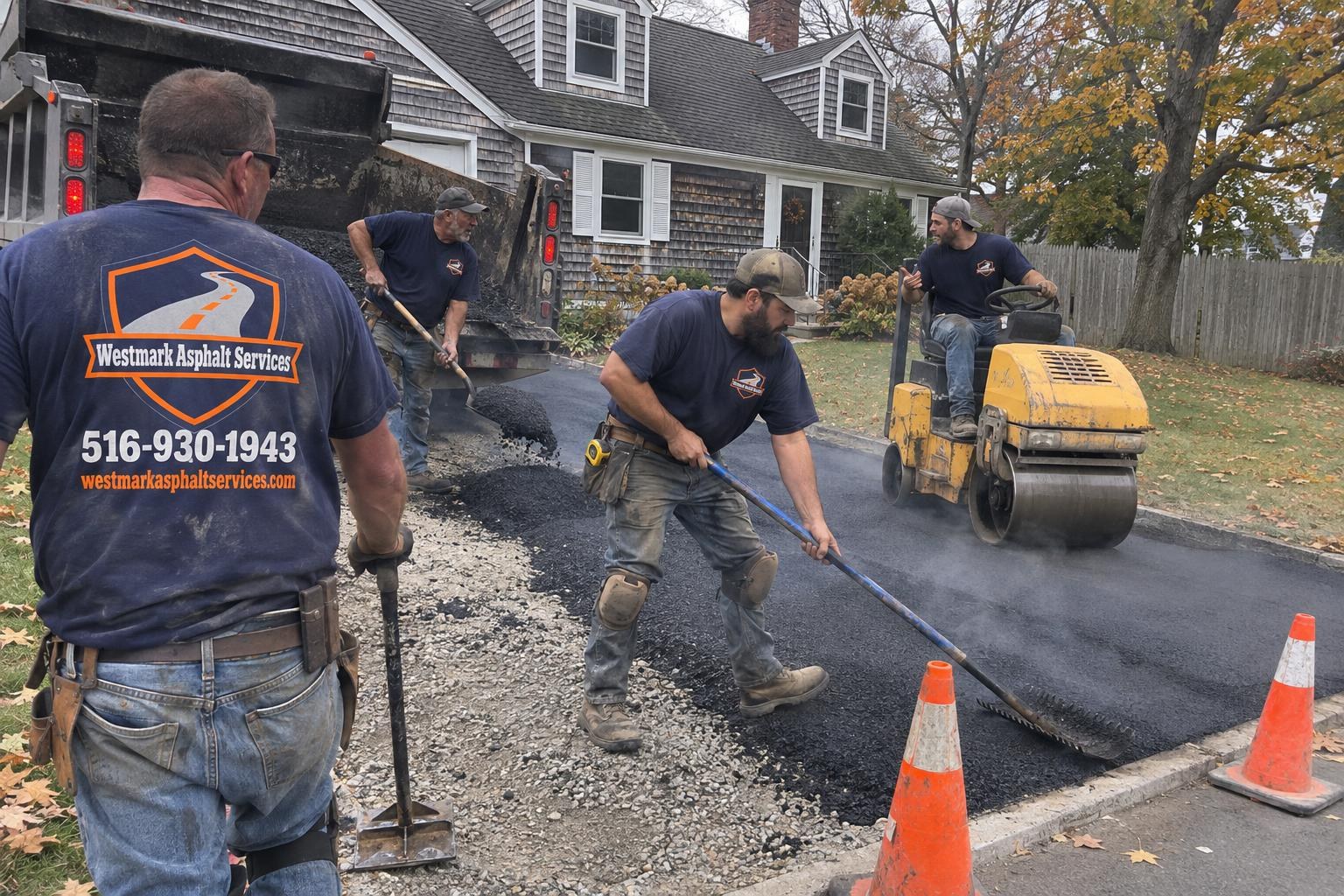
Westmark Asphalt Services crew
Our Story

How we look at an asphalt job

We handle asphalt paving, sealcoating and repair for driveways, lots and private roads across the Bronx and the surrounding towns. Asphalt work is really base work with a surface laid on top, and that's the part we focus on. We got into this trade because too many driveways around here get repaved every few years instead of done once properly.

If you're on this page, there's a good chance you've got a cracking driveway, a parking lot with standing water in one corner, or a patch job from a few years back that's already failing. Most of that traces back to the base, not the asphalt itself, soil that wasn't compacted enough or water that was never graded away from the surface. We check the base before we touch the top layer, because resurfacing over a bad base just buys you another year before it cracks again.

10+
Years Experience
500+
Projects Completed
11
Cities Served
Why Choose Us

What you get when you hire us

None of this is complicated. It is mostly just doing what we said we would do.

Licensed and Insured

Being licensed and insured isn't optional with hot asphalt and heavy equipment on a property. Ask for certificates before any contractor starts, not after.

Straight Written Quotes

We measure the area and tell you the asphalt depth in writing before we touch a shovel. There's no surprise add-on once the trucks show up.

Our Own Crew

We don't hand the job to a sub we've never worked with before. The people grading your base are the people we trust with our own truck on the street.

We Clean Up After

A paving job leaves behind scraped sod, old asphalt chunks and stone dust if nobody deals with it. We haul it out the same day we finish.

We Work Around Weather

Pouring asphalt too cold or too wet means a surface that never compacts properly. We track the forecast and move the date rather than rush a bad pour.

We Know the Area

Clay-heavy soil and old building fill show up differently from block to block in the Bronx. Knowing that before we dig saves a redo later.

Common Questions

Things people ask us

What people want to know about us before hiring us.

How long have you been doing asphalt work?
Experience in asphalt paving matters because so much of the job, base compaction, pitch, timing the pour against weather, comes from having done it wrong once and fixed the approach. Asking a contractor directly about their background specifically in asphalt versus general construction is a reasonable question. Years in the trade specifically with asphalt, not just concrete or landscaping, is the more useful number to ask about.
Do you use your own crew or subcontractors?
Some asphalt contractors run their own crew for every job, while others subcontract grading, striping, or hauling to specialists. Neither approach is automatically better, but it's worth asking who will actually be on site day to day. A contractor who's hands-on with their own crew usually has tighter control over quality and scheduling.
Can I see photos of past driveways or lots you've paved?
Most asphalt contractors can show photos of recent driveway and parking lot jobs, including close-ups of edge work and drainage details. Photos of a job a few years old are more useful than brand new ones, since they show how the asphalt held up over time. Asking specifically for examples similar to your own job, residential versus commercial, narrows things down.
Why choose a smaller asphalt contractor instead of a large paving company?
A smaller asphalt contractor often means more direct communication and the same person quoting and running the job, rather than being passed between departments. Larger firms may have more trucks available for big commercial jobs, but smaller crews tend to be more flexible on scheduling residential work. It comes down to the size and type of job actually being done.
Where are you based and how far do you travel for a job?
Based in the Bronx, asphalt paving and repair typically extend to surrounding towns within about a 50 mile radius. Driveway and small lot jobs are common throughout that range, while larger commercial paving may be limited by equipment transport. Confirming an address is within the service area is a quick first step.
When are you available to schedule work?
Asphalt paving is seasonal work, limited mainly by temperature, so spring through fall is when most paving and resurfacing gets scheduled. Sealcoating and crack filling also need dry, mild weather to cure properly. Winter availability is usually limited to emergency pothole patching with cold mix asphalt.
Do you clean up the site after paving is finished?
Cleanup after an asphalt job should include removing excess asphalt, old millings, stone, and any debris from excavation, not just raking the surface smooth. Driveways and yards bordering the work area should be checked for tracked asphalt or stone before the crew leaves. Asking what cleanup is included in the quote is worth doing, since hauling debris off site sometimes costs extra.
What happens if something on my property gets damaged during the work?
A licensed and insured asphalt contractor carries liability coverage for damage to things like sprinkler lines, curbs, or landscaping during excavation and paving. Reporting damage immediately allows it to be documented and addressed before the final invoice. Insurance details should be confirmed before work starts, not after something happens.
Will you finish a paving job that another contractor started or walked away from?
Picking up a paving job mid-project is possible, but it usually requires inspecting what's already been done, especially base compaction and grading, before adding new asphalt on top. Work done previously that wasn't compacted or pitched correctly may need to be redone rather than built over. An honest assessment upfront avoids paving over a problem that was already there.
How can I tell if asphalt paving was done correctly?
Properly paved asphalt should be consistent in thickness, compacted enough that it doesn't flex underfoot, and pitched so water runs off rather than pooling. Edges should be clean and tight against curbs or buildings, not crumbling within the first season. Asking for the asphalt thickness and base specs in writing beforehand gives something concrete to check the finished job against.

Got something that needs doing?

Free estimate, a price in writing, and work we stand behind.
Call (516) 930-1943